VALENCIA
Recommendations
If you are traveling all the way to Spain to join us for this adventure, you already know that Valencia is where Joey lived in high school and is home to his beloved host family. Valencia has many wonderful sites to explore, from historic cathedrals to Roman ruins to futuristic architecture straight out of science fiction. You are minutes away from the Mediterranean Sea and beautiful beaches. You can easily visit the marshlands where rice for paella is grown.
Sites of Interest - Old Town
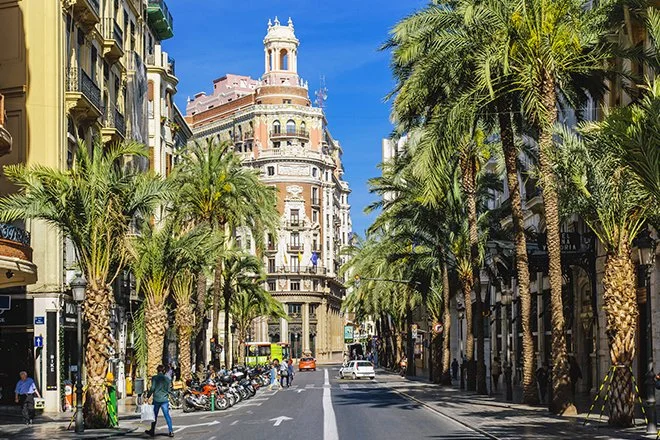
The city of Valencia is quite compact and easy to get around. The main tourist area is the Ciutat Vella (Old Town) — a classic weave of old stone streets dotted with historic sites, restaurants and bars. Though it's the main tourist area, it's also popular with locals.
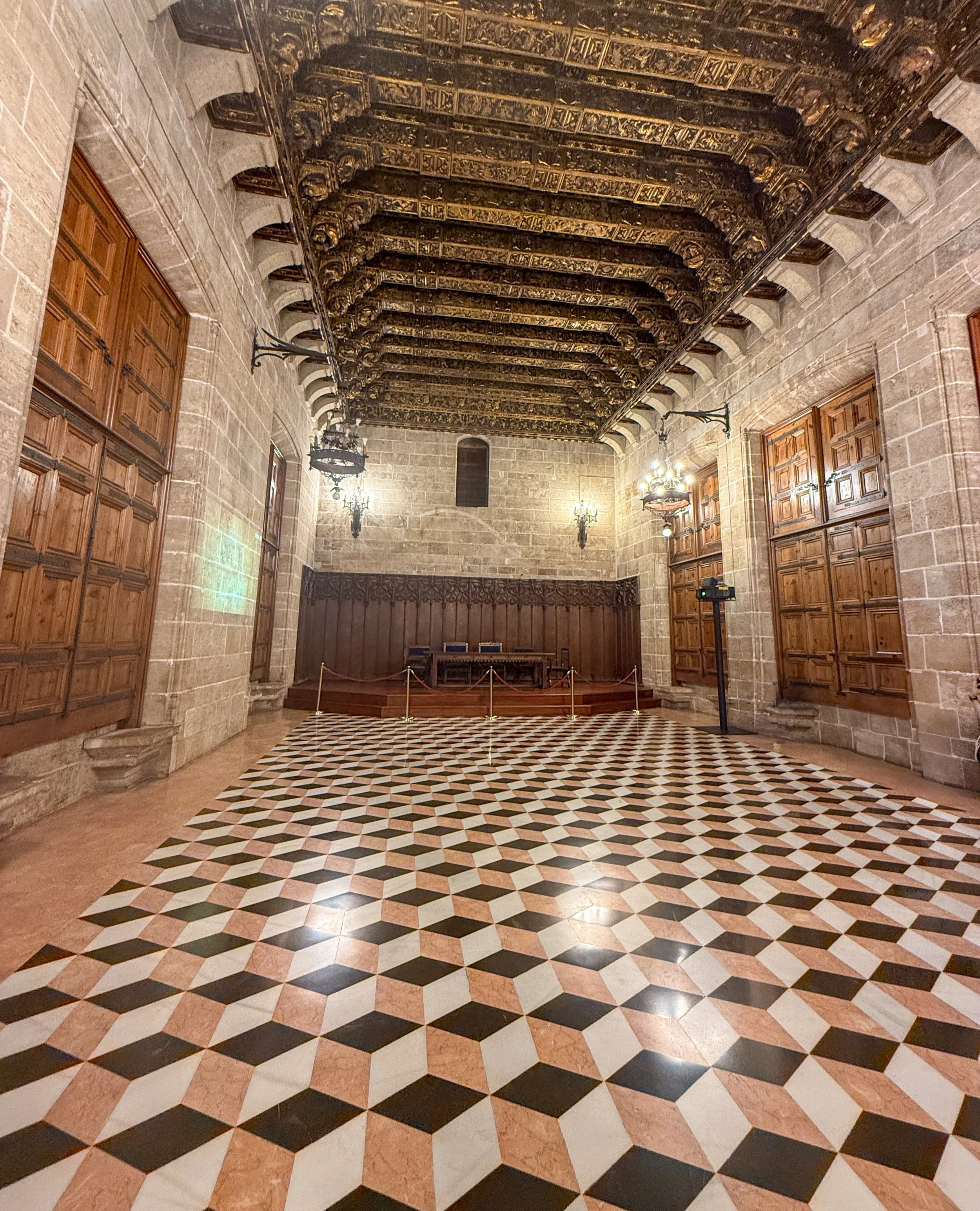
A beautiful late-15th-century Gothic building with multiple rooms and gardens, originally a trading hall for the city's silk merchants. The main hall is famous for its towering spiral columns, and the whole site is a UNESCO World Heritage monument. Today it's often used by Spanish royalty and politicians for important gatherings. It's right around the corner from the Central Market, so it's a nice stop before hitting up the market for lunch/provisions.
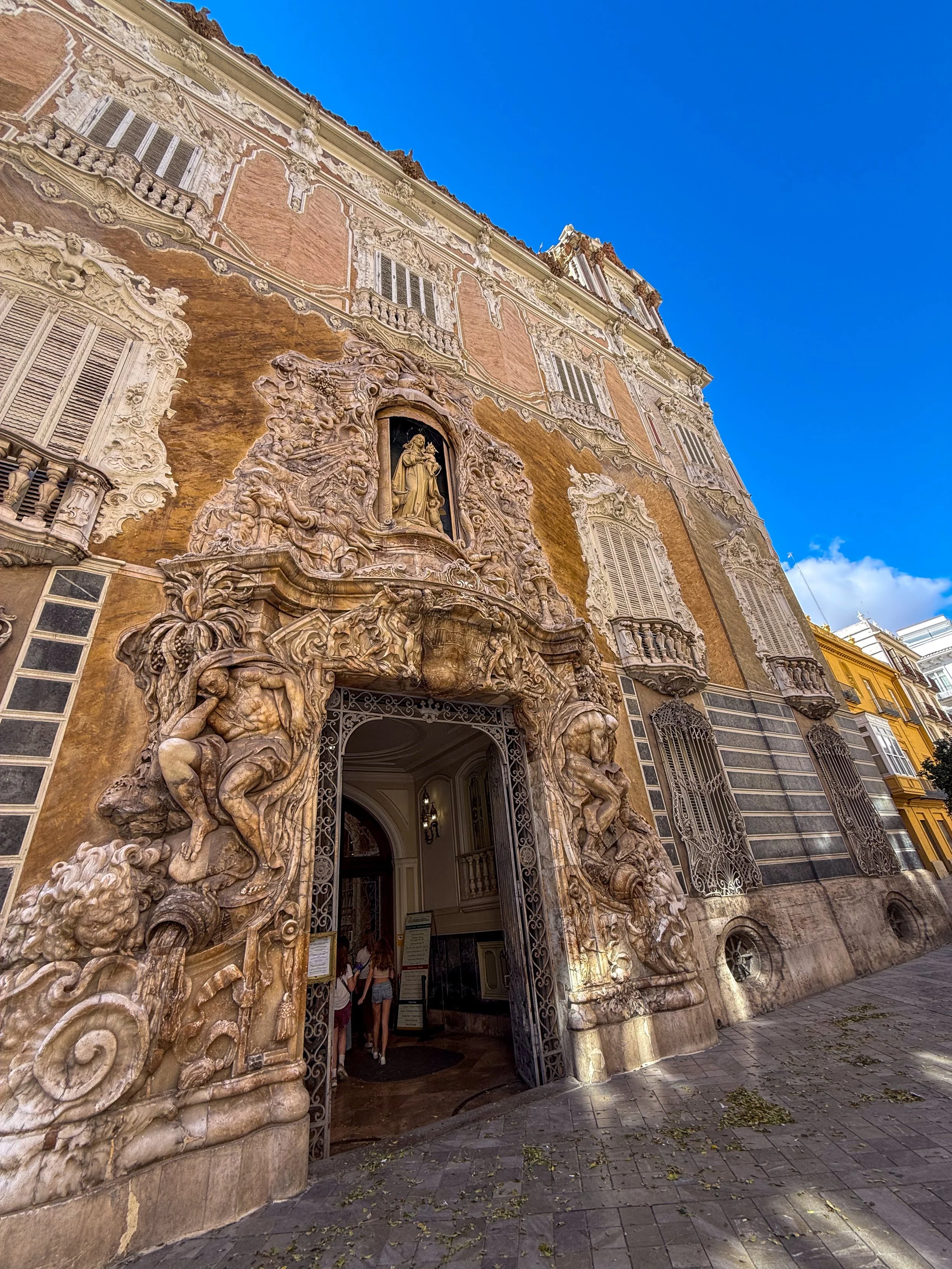
The ceramics collection is fascinating, but you can also go just to marvel at the building itself — the Palacio del Marqués de Dos Aguas, an 18th-century rococo palace. The exterior alone is worth a visit for the dramatic alabaster carvings over the entrance. And the rooms inside are stunning, with hand-painted ceilings and gilded details throughout.
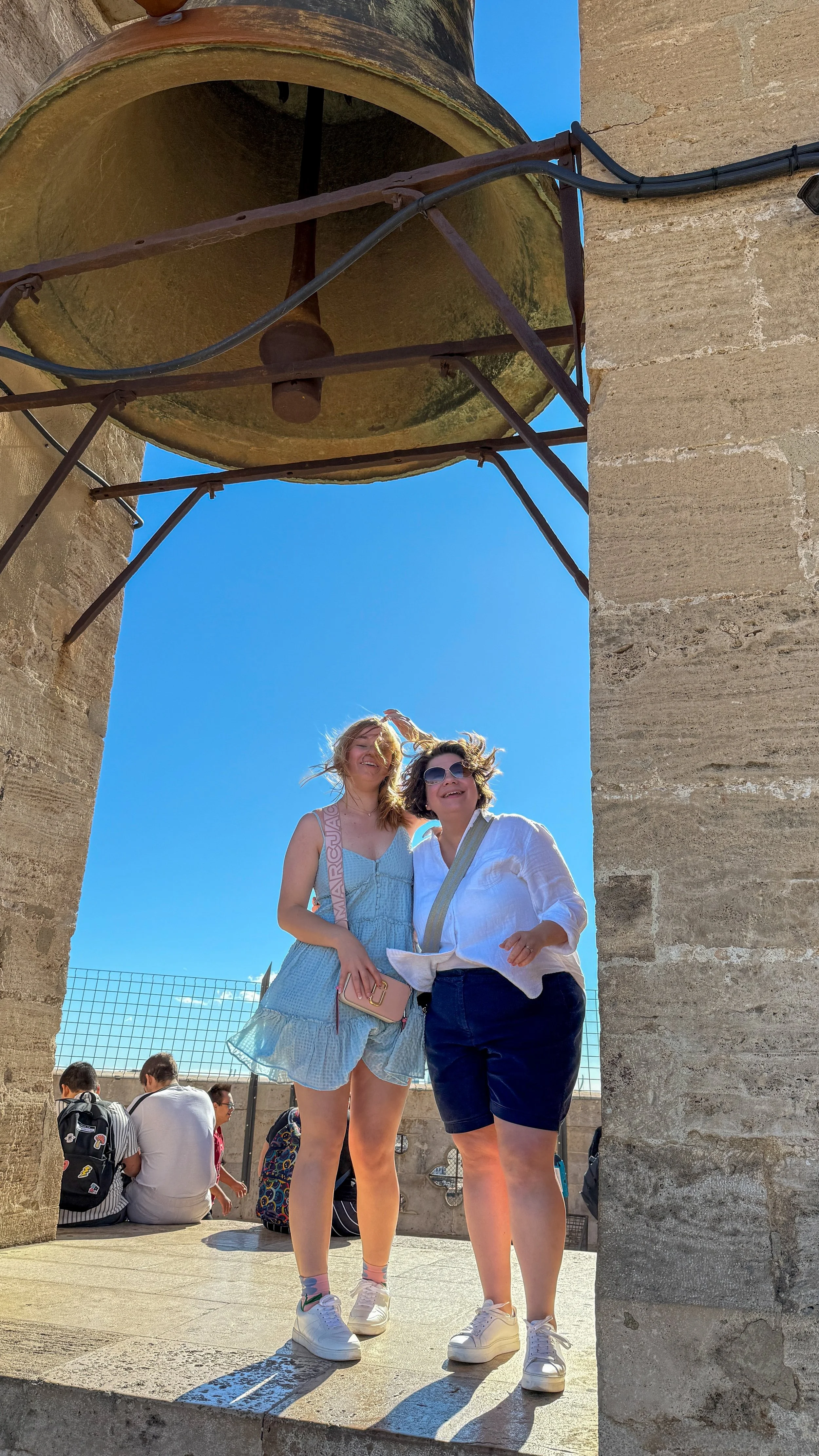
A mostly Gothic cathedral built across the 13th–15th centuries on the site of a former mosque. They claim to have the Holy Grail. Both Pope John Paul II and Pope Benedict XVI used the Santo Cáliz (Holy Chalice) during mass. It's worth climbing the bell tower (the Miguelete) for excellent panoramic views over the old city.
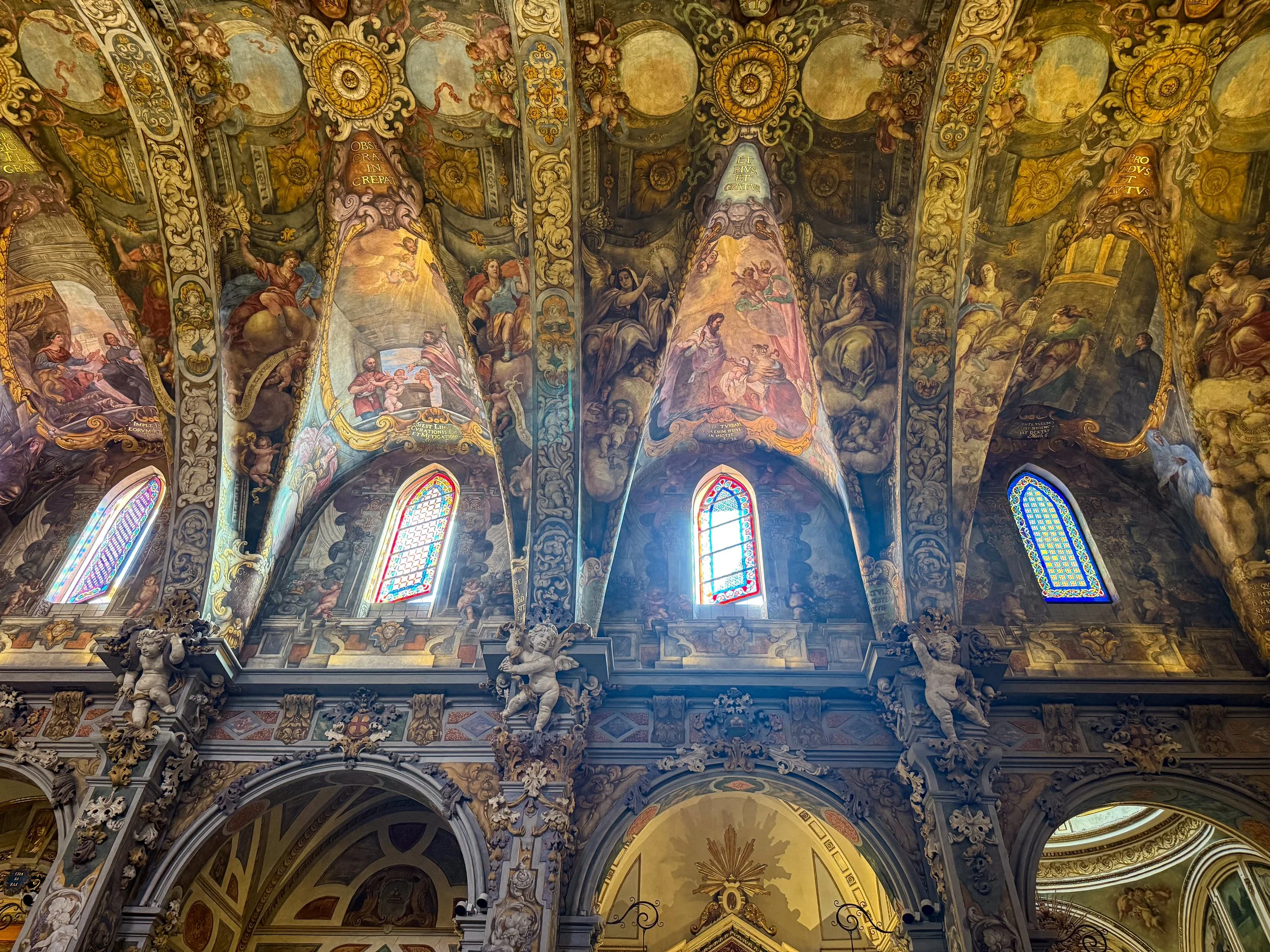
While you should definitely go to the main Cathedral of Valencia (and climb the bell tower if you aren't afraid of heights), this is a smaller church in the same Old Town area, sometimes called "the Sistine Chapel of Valencia" because the walls and entire ceiling are covered with amazing frescoes. The audio tour is well worth doing — it walks you through the story in each fresco.
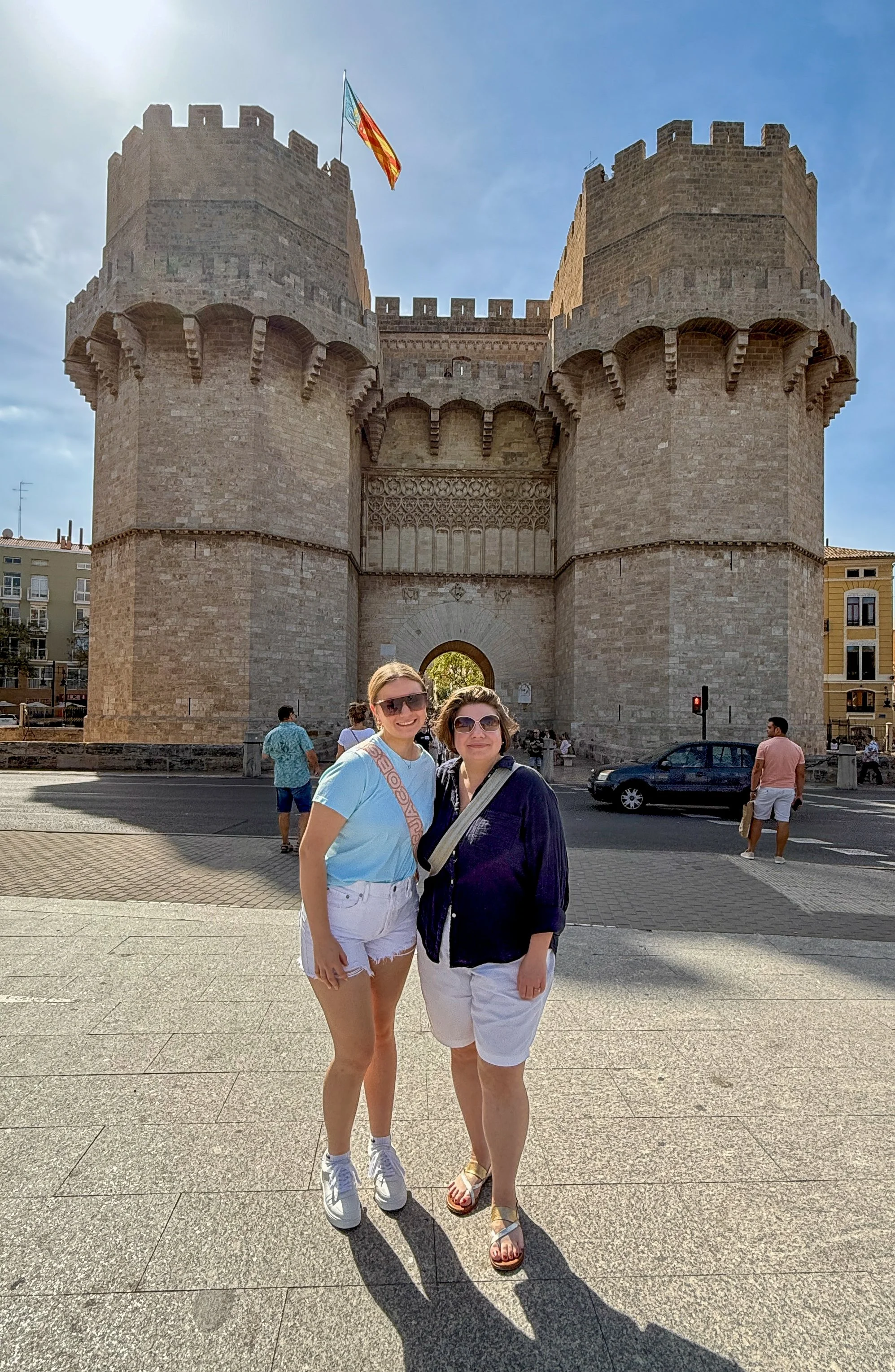
The two surviving medieval gates from Valencia's old defensive walls. Serranos is the more dramatic of the two — climb to the top for a great view over Old Town and the Turia Gardens below. Both are right at the edge of the historic center, and you'll likely walk past them on the way in. The Torres de Quart still has visible cannonball scars from Napoleon's troops.
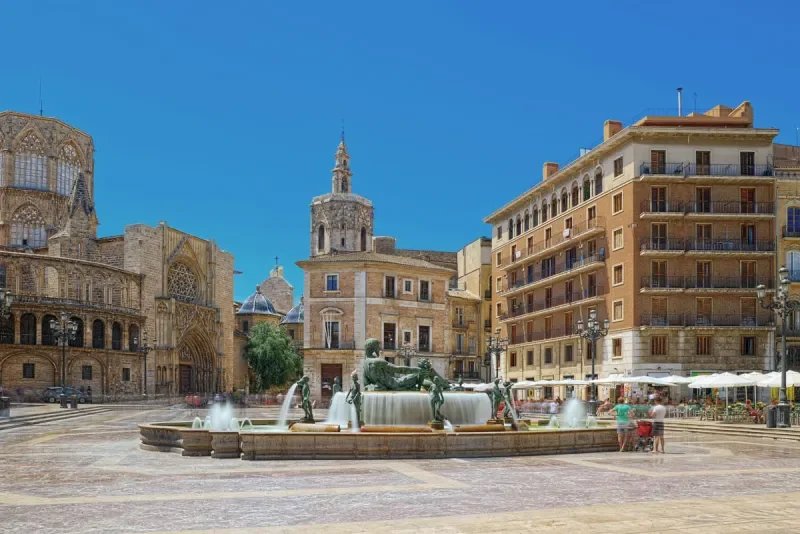
The central plaza of Old Town, bordered by the Cathedral, the Basilica de la Virgen and the Turia Fountain. It's the main gathering spot in the historic center. Worth knowing: every Thursday at noon, the Tribunal de las Aguas meets right outside the Cathedral — a thousand-year-old water court that still settles irrigation disputes between local farmers, in public, in Valencian.
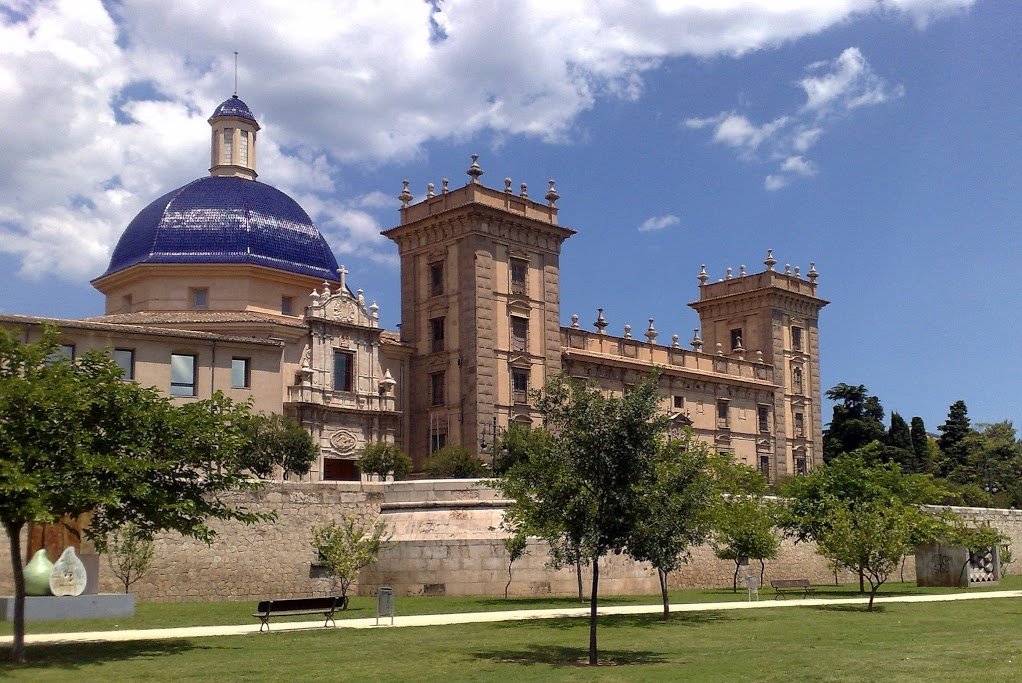
One of Spain's most important art museums, often ranked second only to the Prado. The strongest holdings are in Valencian masters like Joaquín Sorolla and José de Ribera, with additional works by Velázquez, El Greco and Goya. It's housed in a 17th-century former seminary just across the Turia from the Old Town, and admission is free. We didn't make it there, but it's supposed to be great.
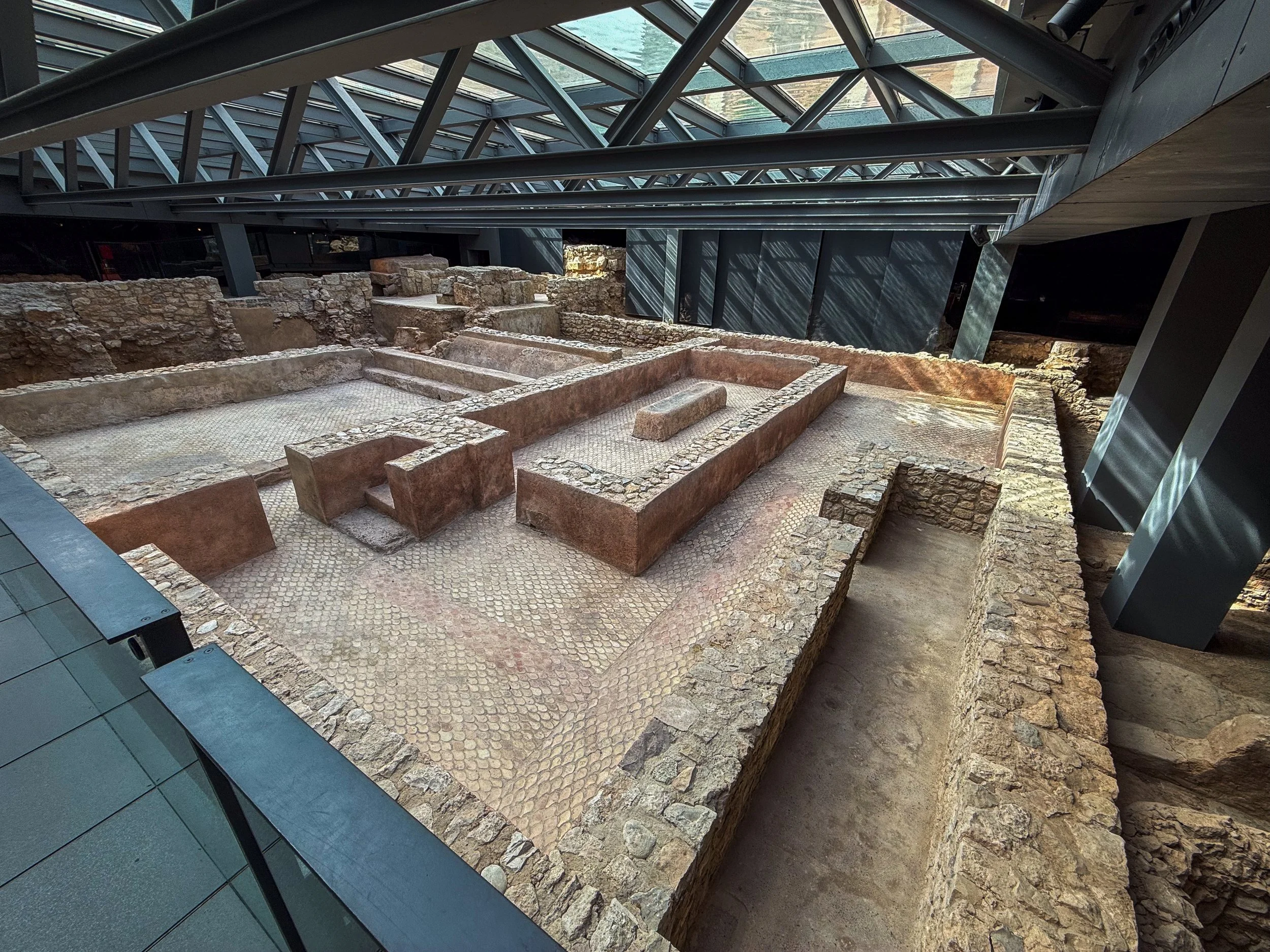
An awesome underground museum showcasing well-preserved Roman ruins, right in the heart of Old Town just steps from the Cathedral. As you walk through, you can see layers of civilizations stacked on top of each other — Roman, Visigothic, Islamic and medieval Christian. Natural light flows in from above, since the museum sits beneath a tranquil glass-bottom fountain at street level.
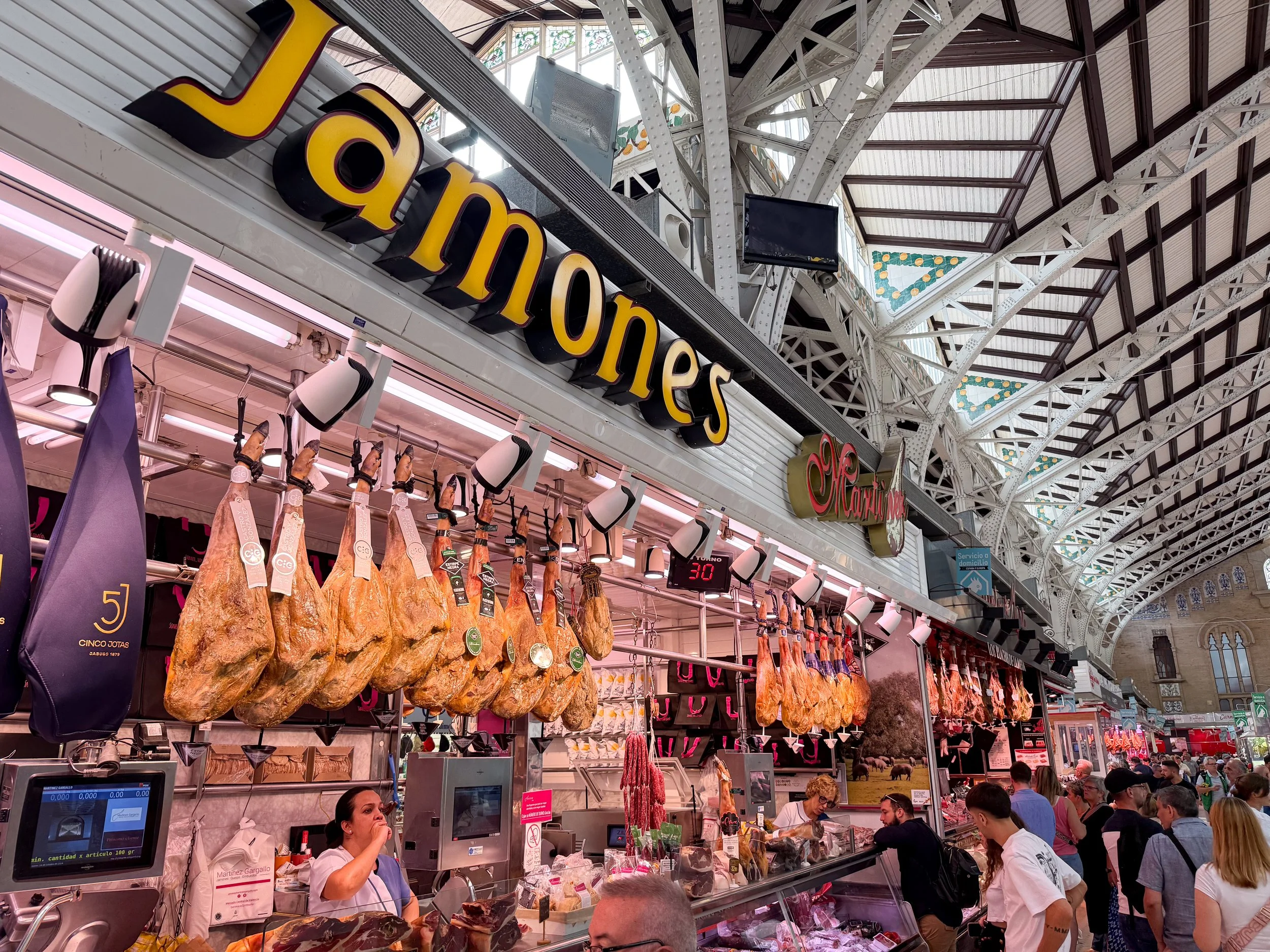
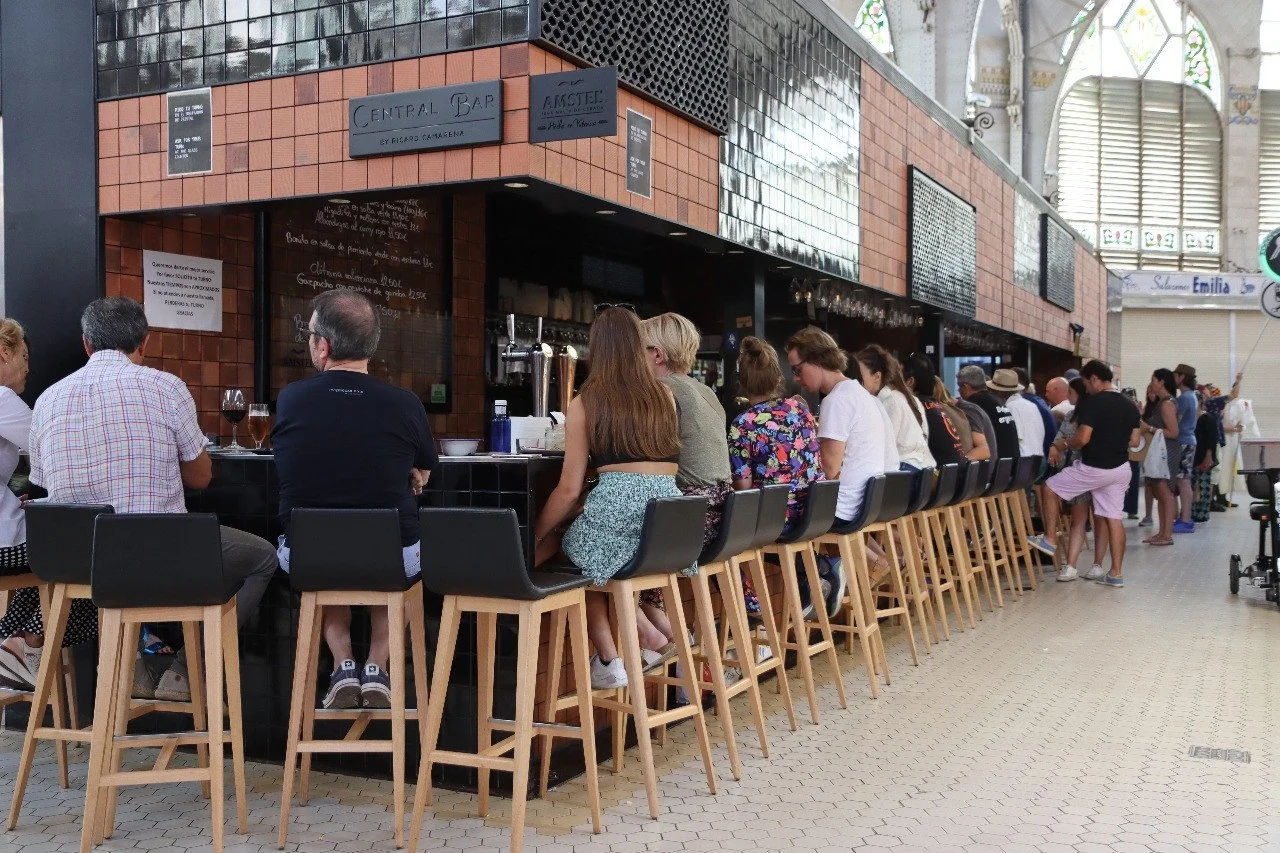
A bustling food market with lots of stands selling everything from jamón and cheese to olives, nuts and more. It's lively all morning until lunchtime, when it closes. A great place to grab snacks, have lunch at Central Bar (see below) or one of the other stands, or just take photos.
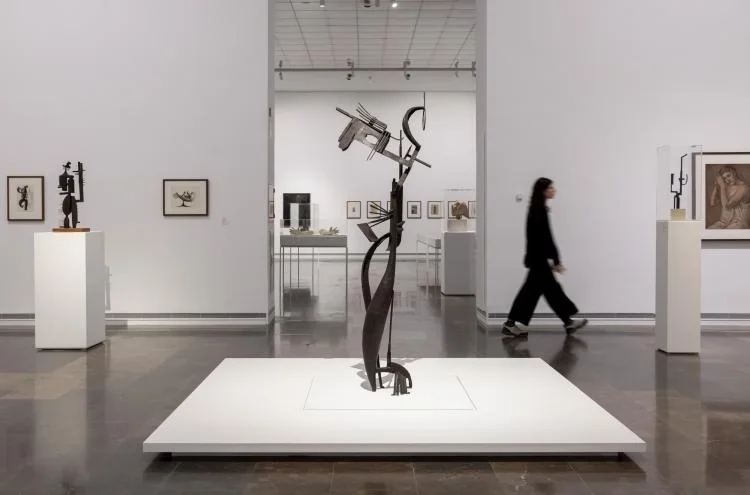
Founded in 1989, IVAM (Institut Valencià d'Art Modern) was the first modern art museum in Spain and is still extremely well regarded. The permanent collection focuses on 20th-century Spanish artists — especially the sculptor Julio González and the Valencian painter Ignacio Pinazo — alongside rotating contemporary exhibits. There's also a really cool basement room built around the remnants of Valencia's medieval city walls.
Sites of Interest - Further Afield
A quick car ride can get you to other areas of the city and the surrounding countryside. There are great beaches only 20–30 minutes from the city, and gorgeous sunsets over a massive lagoon surrounded by rice fields.
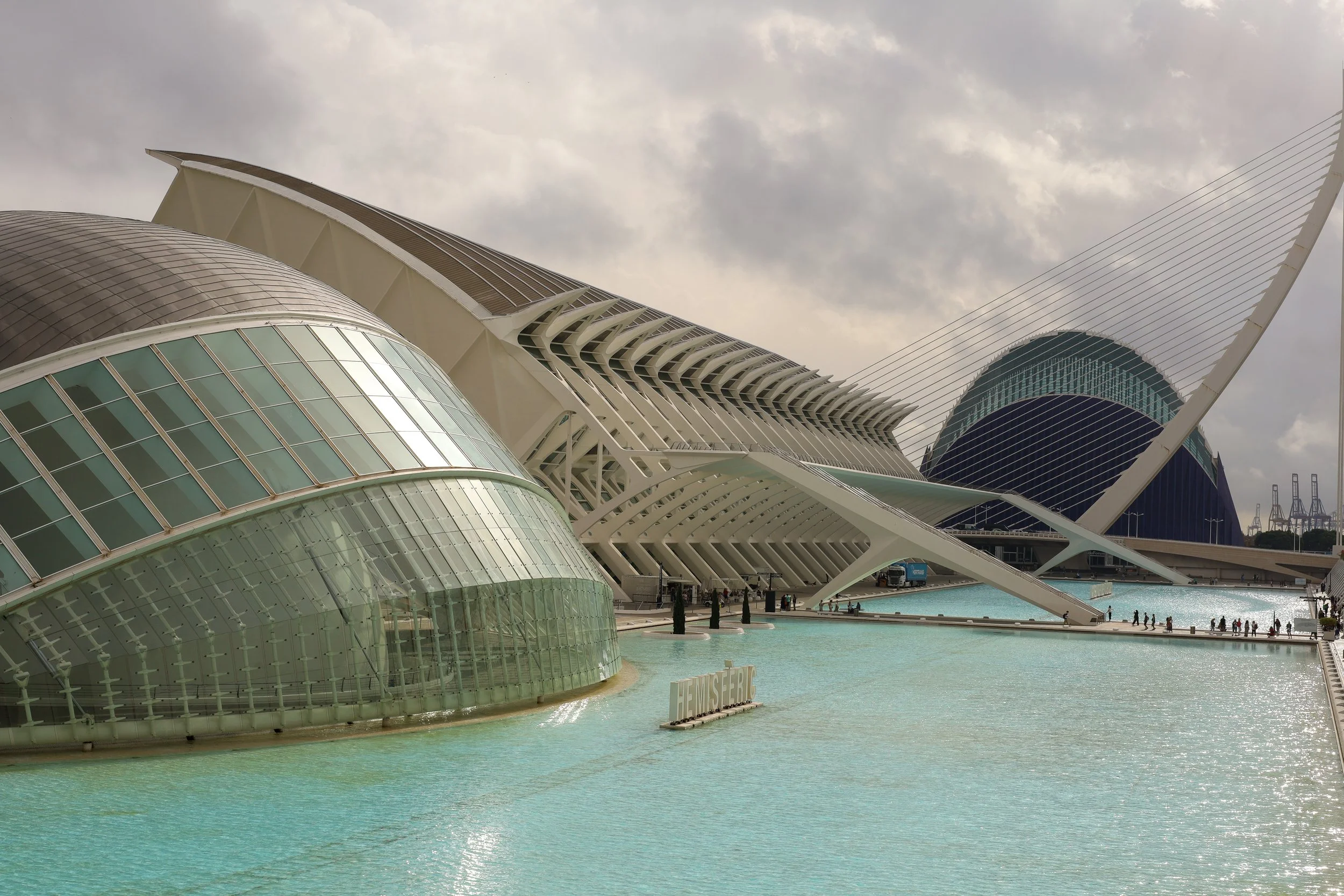
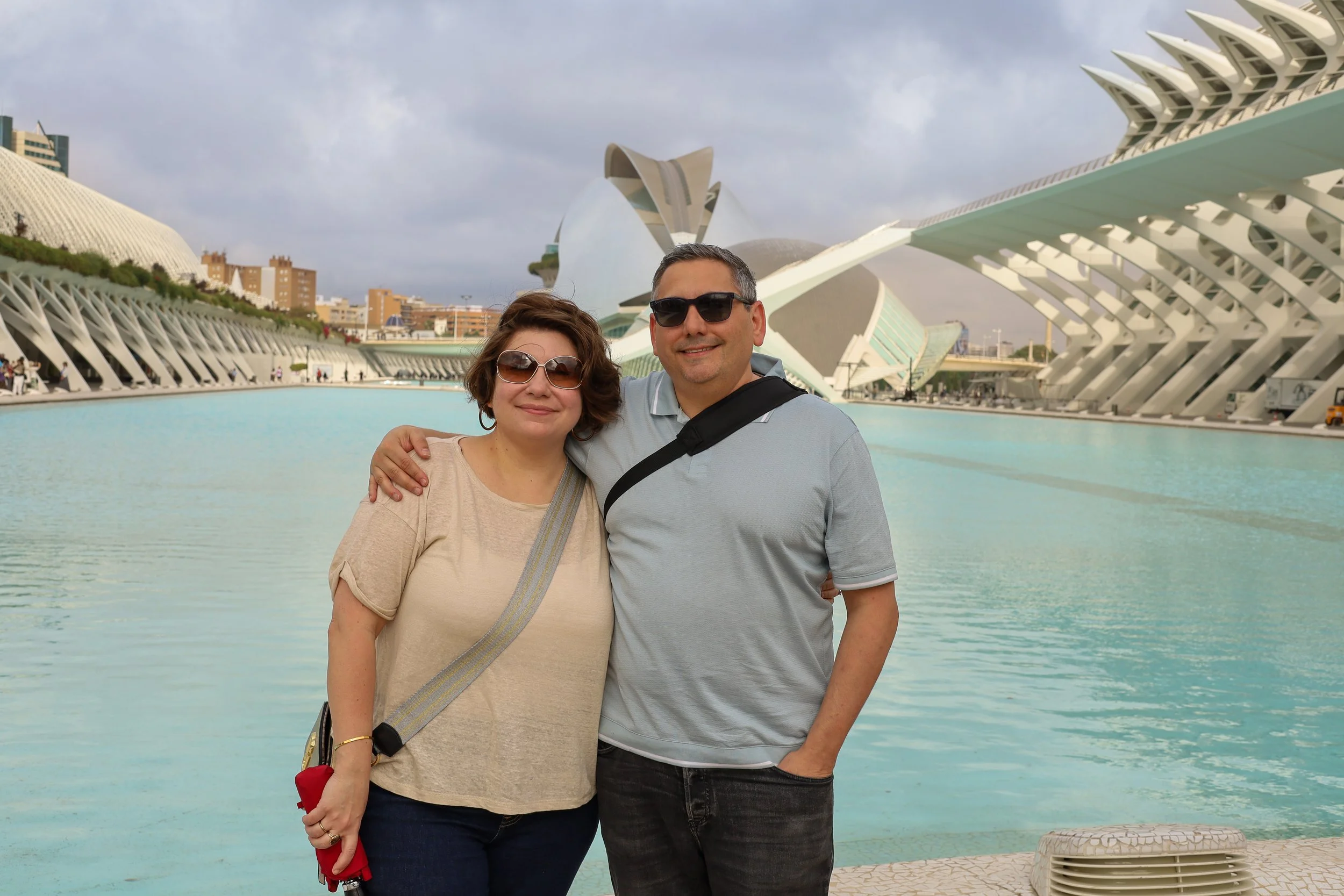
On the outskirts of town sits this surreal architectural wonder, designed by Santiago Calatrava — a Valencia-born architect (and the same person who designed the Oculus in NYC). In addition to walking around the massive fountains and raised garden walkways, you can visit a science museum, a 3D IMAX theater and an aquarium. We highly recommend the aquarium — it's Europe's largest, winding through indoor and outdoor areas with so much to see. The place looks so unique that it shows up all the time in science fiction TV and movies. It was featured in HBO's Westworld and more recently in Star Wars: Andor.
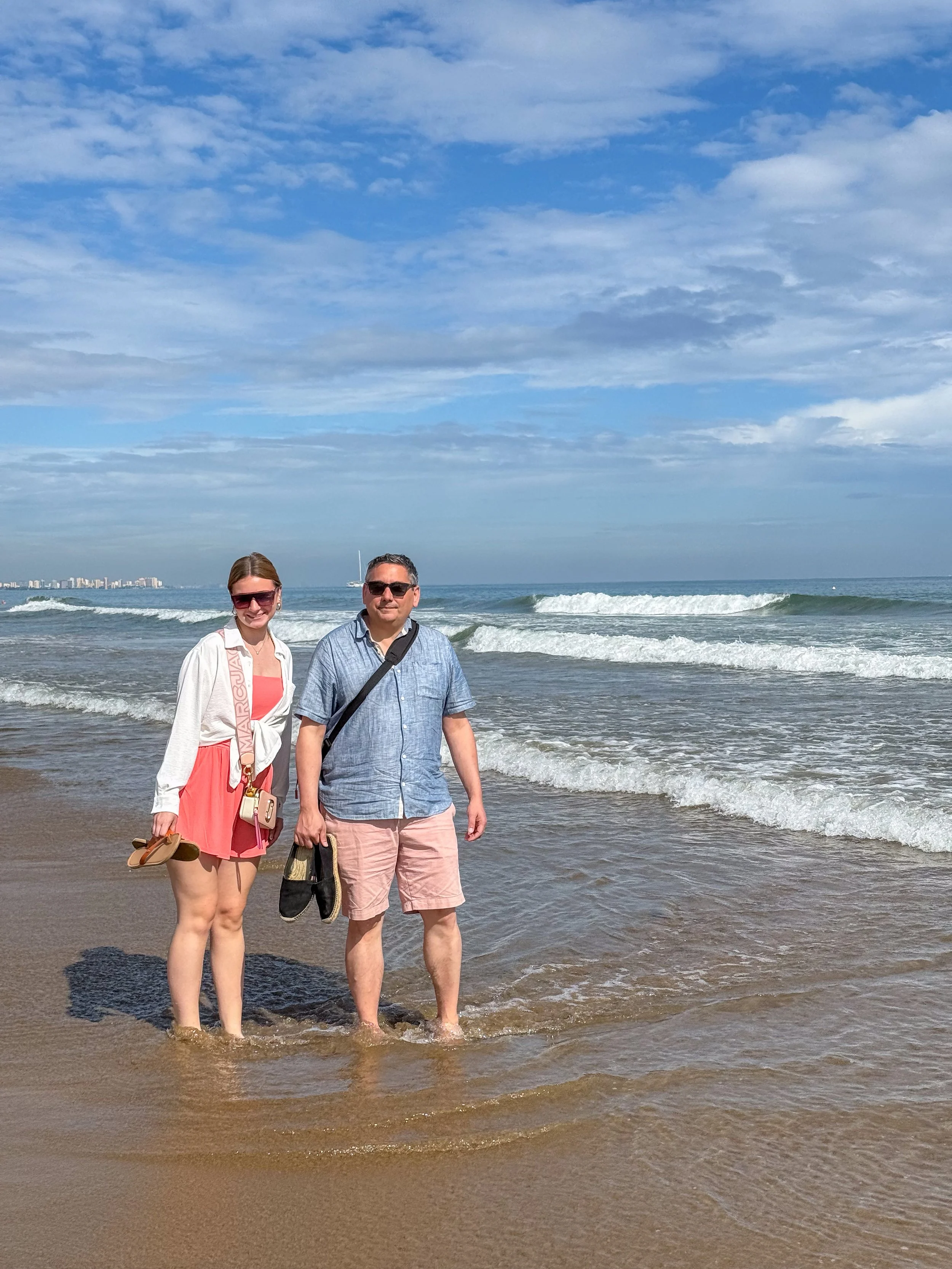
Valencia's main urban beach is Malvarrosa — easy to get to from center city, and lined with cafes, paella restaurants and chiringuitos (beach bars). We went there for paella at Casa Carmela (see the food and drink section). Just to the south, it merges into Las Arenas, slightly more upscale and home to many of the famous beachfront paella spots. For something more low-key, head north to Patacona (a little more local) or south to El Perelló — a quiet coastal town past the Albufera where Joey's host family has an apartment. Joey spent summers there as a teenager, even spearfishing for octopus (don't worry, they didn't let him use the spear gun).
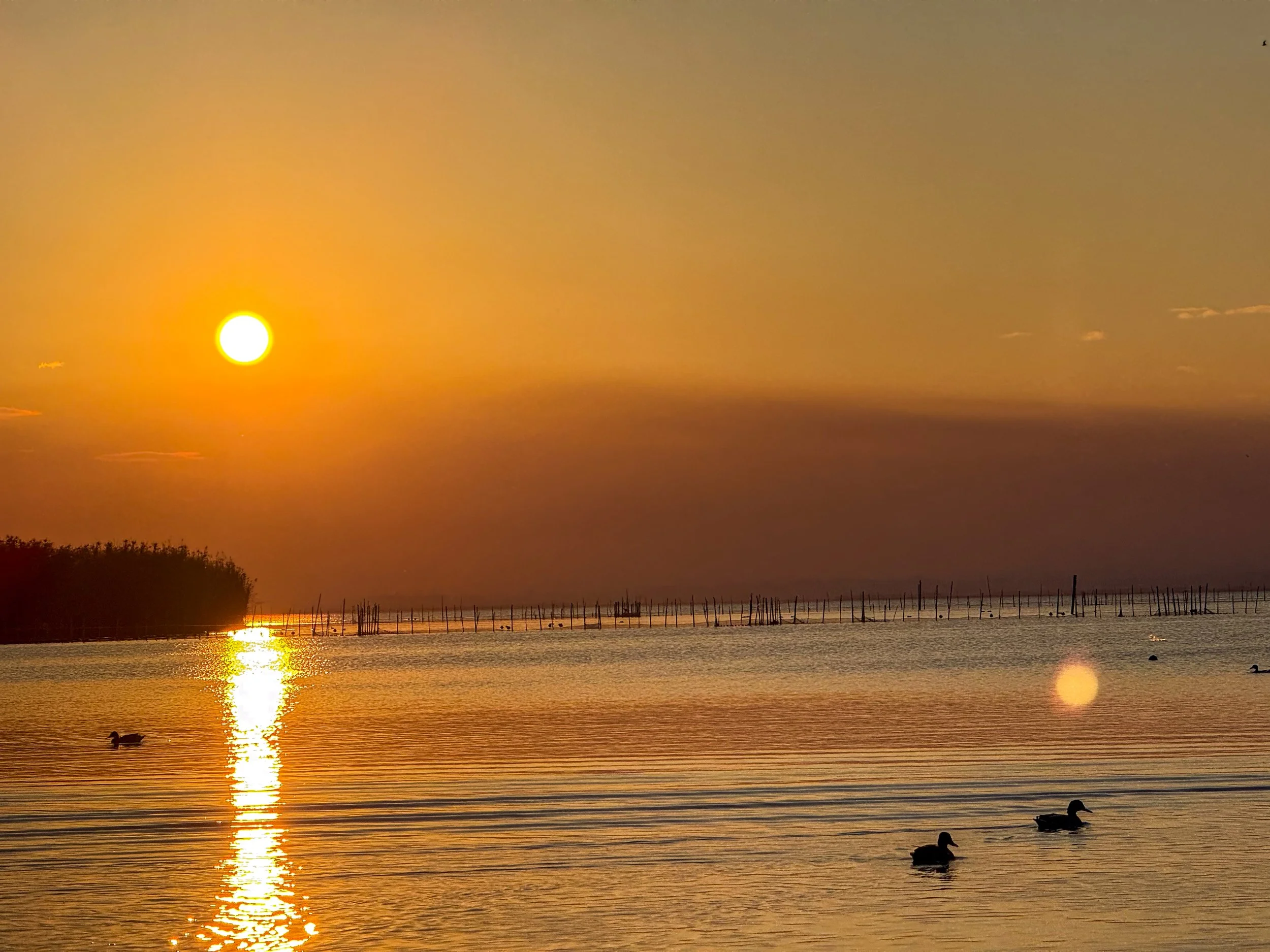
Just south of Valencia, surrounded by the rice fields that supply the paella, sits a massive lagoon called the Albufera. It has the best sunset in Valencia, and you can book a sunset boat tour to enjoy it. We wanted to do a wine tasting and boat tour, and Joey's family (well, a friend of the family) recommended this tour guide - but the timing didn't work out. We ended up booking a private boat tour through this site, and it was great.
South of Old Town is a historic neighborhood called Ruzafa. It's super cute, filled with hip cafes, bars and shopping — a great place to see how local Valencians actually live. You can go grab amazing sandwiches for an early lunch (Almuerzo) at La Cantina de Ruzafa.
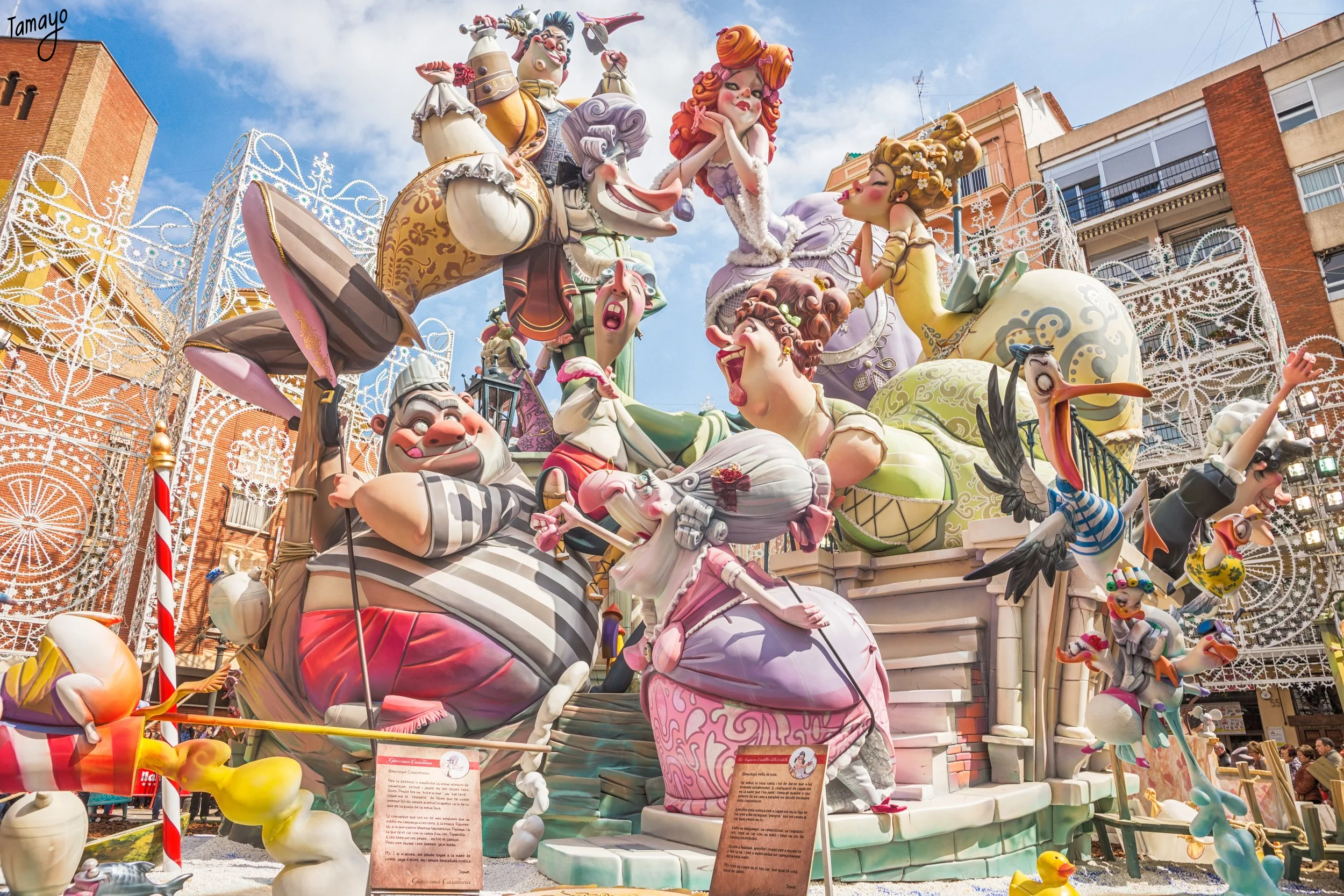
Every March for Saint Joseph's Day, Valencia (the city and the entire province) celebrates with a weeklong festival called Fallas. It's one of the most spectacular things you could ever see. Throughout the city, they build massive, multi-story papier-mâché sculptures that depict all sorts of stories and people, often with political commentary. There are fireworks every night, and on the last night they burn down every one of the sculptures. We didn't make it to this museum, but it's right near the City of Arts and Sciences and could be a fun way to learn more about this super special event.
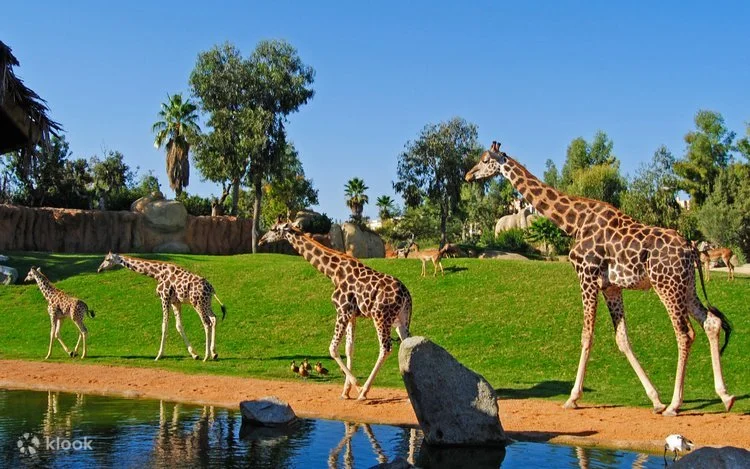
Often ranked one of the best zoos in Europe. The whole place is designed without visible barriers — rock formations, water and plants stand in for cages, so animals appear to be roaming free in re-created African habitats. A big draw for families and anyone tired of traditional zoos. It's a short tram ride from the city center.
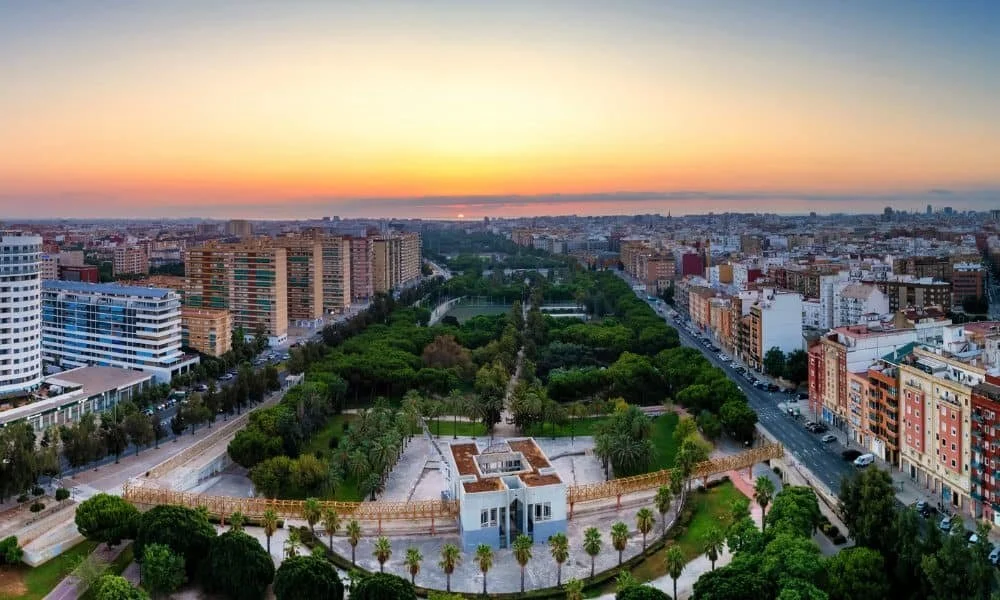
Valencia's defining green space. After a devastating flood in 1957, the city famously diverted the Turia river around the city and turned the old riverbed into a 9km linear park that wraps right through the heart of town. You can walk it, run it, or grab a Valenbisi bike and ride end to end. There's a giant Gulliver-shaped playground halfway through, a beautiful flower bridge (Pont de les Flors) near the Old Town, and the City of Arts and Sciences anchors the southeastern end. Genuinely one of the best urban parks in Europe.
Food, Drinks & Nightlife
As in the rest of Spain, most Spaniards eat a big lunch around 2 p.m. (La Comida) and then a lighter dinner after 9 p.m. (La Cena). Because of the influx of tourists, many restaurants serve early lunches and dinners, but these tend to be the more touristy places. We always had our best meals when we kept Spanish hours — even when we chose a lighter lunch or a bigger dinner. Spaniards sometimes also eat a mid-morning snack around 11 or 12 called Almuerzo. Some places specialize in Almuerzo, where you can enjoy awesome sandwiches instead of committing to the big multi-course lunch.
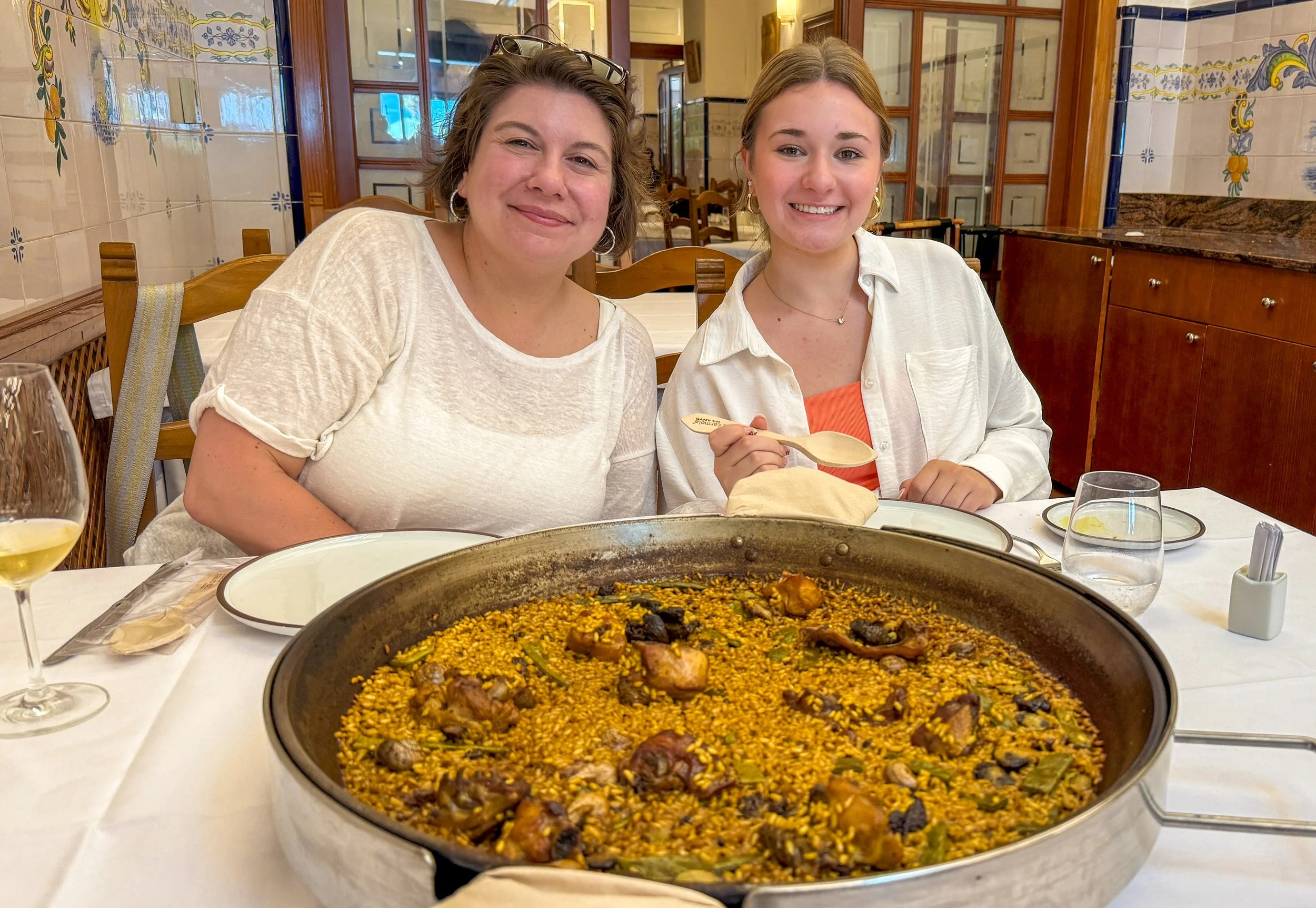
No visit to Valencia is complete without having paella. While you can get paella throughout Spain, Valencia is its birthplace and the city is extremely proud of it. Because of that, you'll see it offered throughout the touristy areas — but I don't recommend just ordering it anywhere. It's a dish most Valencians make at home, always over an open wood fire. If you want an amazing experience, take a short car ride out to the beach and go to Casa Carmela. It was literally the best paella I've ever had (and I make a mean paella). They have a massive indoor kitchen with live-fire cooking, often 20–30 paellas at a time. Traditional Valencian paella is made with chicken, rabbit and small snails — you'll need to make a reservation and order the Valencian-style paella in advance. It's totally worth it.
A popular lunch spot inside the Central Market, with seating around a large U-shaped bar. It's run by celebrated Valencia chef Ricard Camarena, who turns ingredients straight from the market stalls into creative takes on tapas and bocadillos. We had to wait about 30 minutes for a spot, but the food was great.
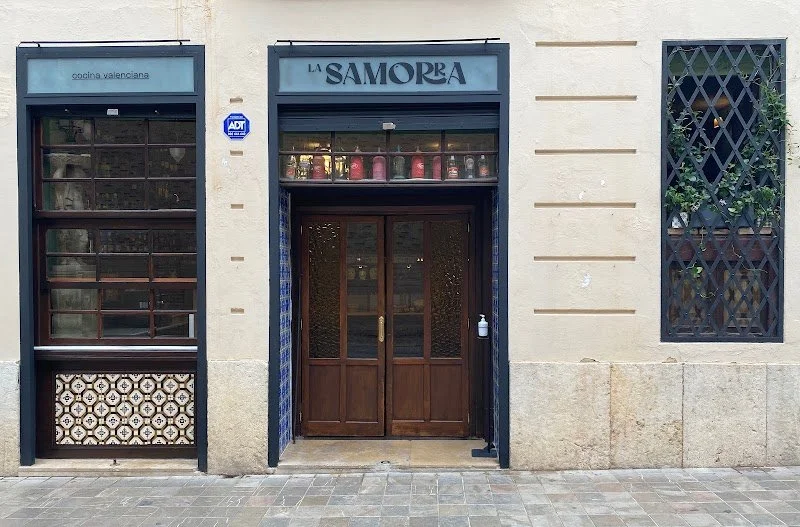
A small, casual place in Old Town, a little off the beaten tourist path. Joey was taken here for dinner by his Spanish family — they serve lesser-known, very local specialties you don't see on most menus.
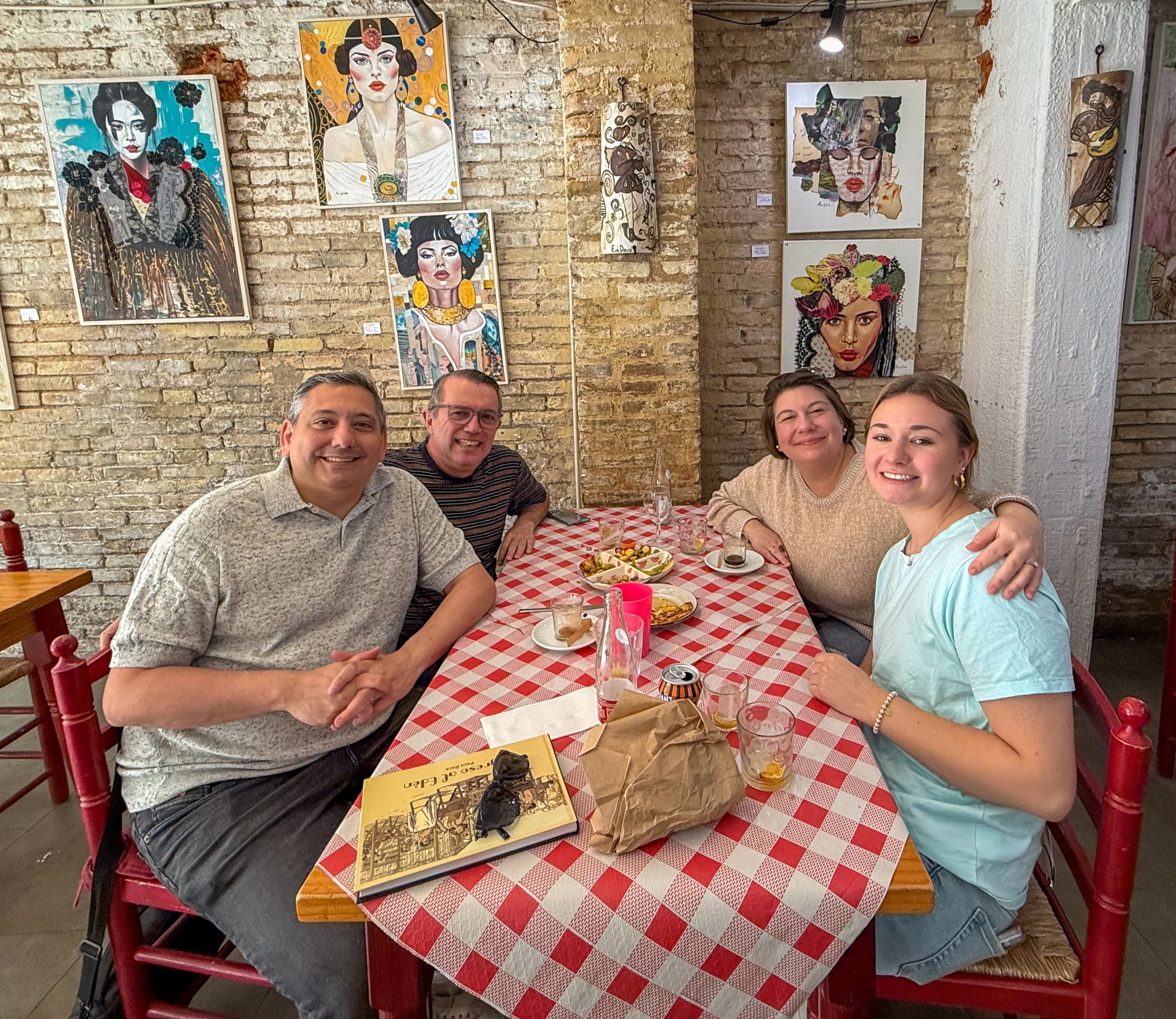
A super cute, very local cafe in the Ruzafa neighborhood, known for its brunch/early lunch (Almuerzo). From morning until about 12:30 p.m. they serve a menu of inventive sandwiches and snacks. Finish your meal with a cremaet, a traditional Valencian coffee-and-liquor drink. Or just order a cortado — the most common Spanish coffee, a short pull of espresso with a roughly equal amount of milk.
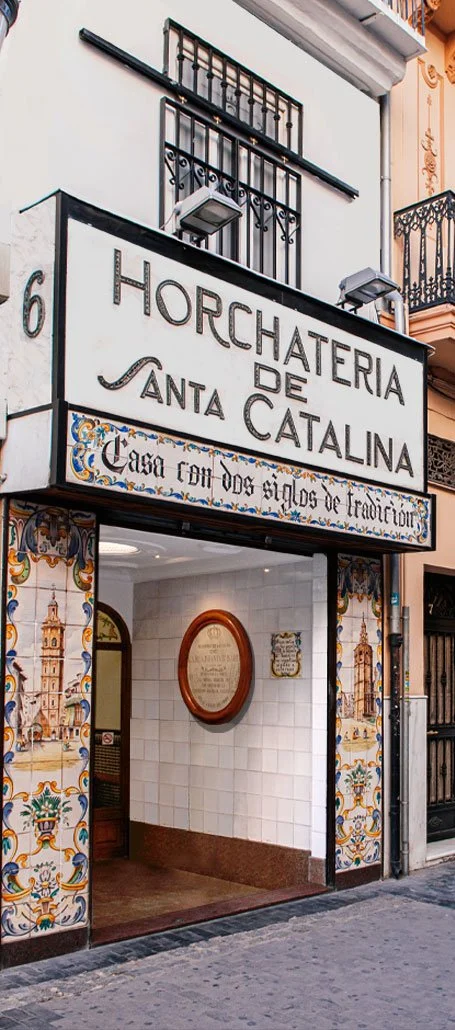
Horchata is a very local Valencian drink. It's different from Mexican horchata — in Valencia, it's made with a type of tuber called the tiger nut. It's cold, milky, sweet and nutty, with a very distinct taste. I personally love it. You can find it throughout Valencia, but many touristy places just serve industrial bottled versions, so it's worth seeking out places that make it fresh. This place is super cute and right in Old Town near the Santa Catalina church. You can also get churros and chocolate, another very common Spanish treat. Horchatería Fabián is also supposed to be great — but we never made it there. Most Spaniards enjoy horchata and churros as an early evening snack, so most of these places reopen after lunch around 4 or 5 p.m.
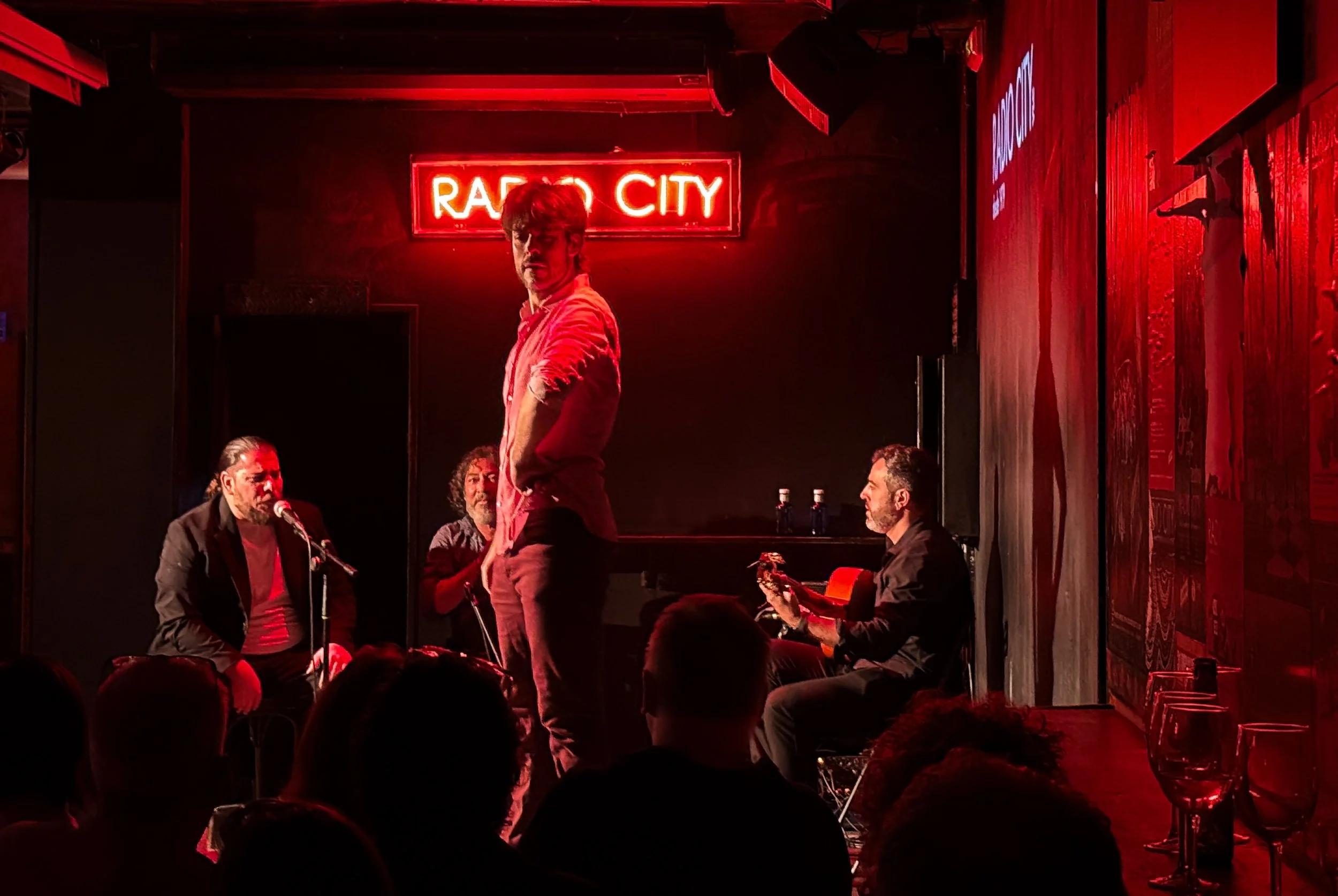
This is a bar and live music venue. Every Tuesday is flamenco night. While flamenco really is more of a Southern Spain specialty, this place is legit. If you're there on a Tuesday, I totally recommend checking it out. It's in Old Town, but a little off the beaten tourist path. We grabbed dinner before the show at Sorbito Divino, a wine bar right around the corner in a super cute small plaza.
This is a local jazz club that was highly recommended by Joey's Spanish family. We ran out of time and never made it there, but it's supposed to be great.